
The synergy of drugs, devices, and digital therapeutics
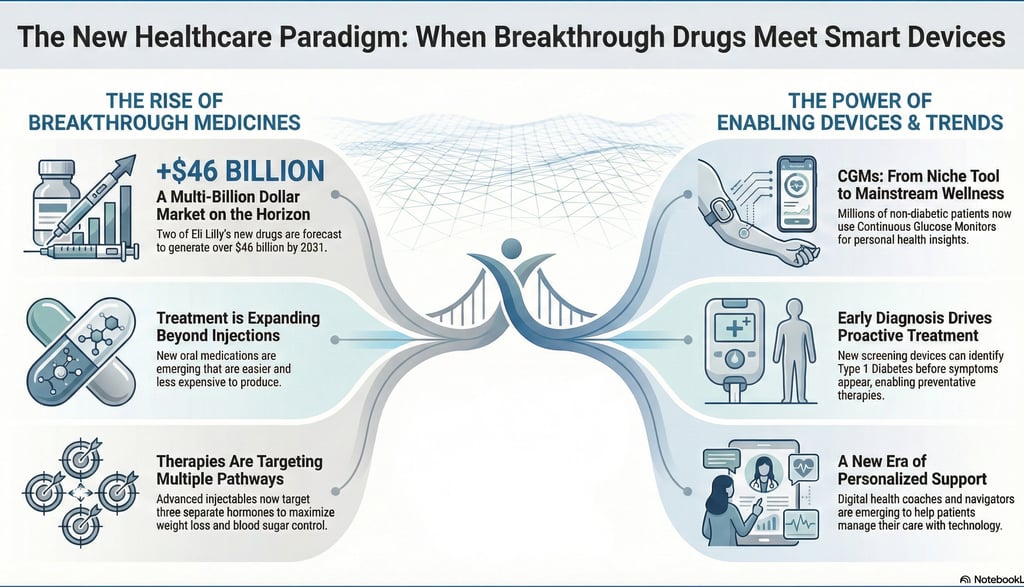
The combination of medicine and devices, exemplified by Continuous Glucose Monitors (CGMs), represents a fundamental shift from episodic clinical care to continuous, technology-enabled lifestyle-oriented care. While originally a medical necessity for insulin management, CGMs have become a mainstream tool for proactive health management among millions of people without diabetes.
The CGM example: Bridging medicine and devices
The evolution of CGMs highlights how medical hardware is increasingly integrated with software and pharmaceutical treatment:
Mainstream wellness: Millions of individuals are now using CGMs for general health, moving the technology away from being solely a "diabetic device".
Preventative treatment: Early screening devices, such as the ELSA finger-prick test, identify children at risk of Type 1 Diabetes (T1D) before symptoms appear. This allows for the earlier introduction of medicines like teplizumab, which can delay the need for insulin injections by approximately three years.
Home diagnostics: The trend is moving toward "medical tricorders" like the BeamO, which allow patients to perform multi-functional health checks at home, effectively shifting testing from the clinic to the living room.
Core trends driving integration
Several key trends are accelerating the intersection of pharmaceutical medicine and digital devices:
Digital Health Coaching and Navigators As healthcare becomes more complex, new professions are emerging to interpret device data. Digital health coaches use insights from wearables and apps to provide tailored guidance on diet, exercise, and chronic condition support. Digital patient navigators further assist individuals in traversing the digitised healthcare system to address literacy gaps.
Pharma and Tech Partnerships Rather than treating tech giants as competitors, pharmaceutical companies are now forming strategic alliances. A notable example is the Co-Innovation AI Lab launched by Eli Lilly and NVIDIA, which uses "physical AI" and robotics to accelerate the discovery and production of new medicines.
AI-Driven "Invisible Helpers" Artificial Intelligence is no longer just a distant promise; it is becoming a companion throughout the patient journey. AI tools are increasingly used to:
Flag potential drug interactions.
Analyse scans and vital signs to detect subtle physiological changes.
Translate medical reports and guide patients through recovery after hospital discharge.
Subscription-Based Data Analysis Device manufacturers are shifting from simply selling hardware to providing ongoing subscription-based services. Companies are increasingly finding value in these models, where users pay for deep analysis of the data collected by their health sensors.
Outlook
The integration of data from wearables with Electronic Health Records (EHR) is expected to provide a high Return on Investment (ROI) for overburdened healthcare systems by focusing on preventative care rather than just "miracle drugs". This shift relies on transparency and consent, particularly as tools like AI scribes become common in exam rooms to reduce the administrative burden on doctors.
Buoyancy Health Strategy
Steady. Strategic. Scalable Healthcare Growth
© 2026 Buoyancy Health Strategy Ltd. All rights reserved.